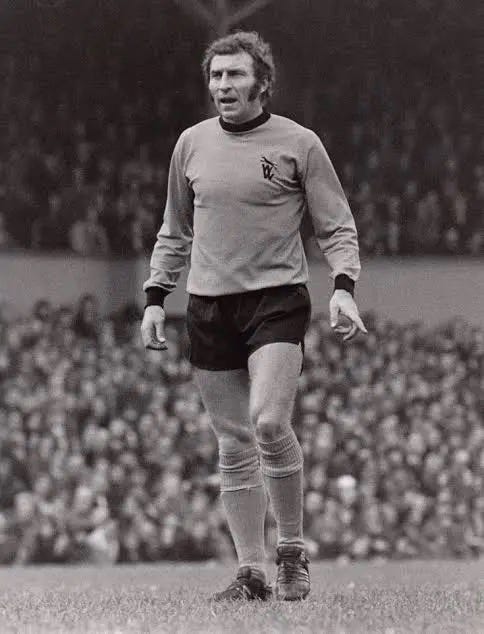

Michael Alfred Bailey, known to generations of Wolverhampton Wanderers supporters simply as Mike, was more than a midfielder or a captain. He was the beating heart of a Wolves side that restored pride, silverware and belief to Molineux in the late 1960s and 1970s. Barrel-chested, uncompromising in the tackle, creative with the ball at his feet and a natural leader who drove those around him by example, Bailey embodied the qualities supporters still associate with the club’s great captains. On 17 August 2026 he passed away at the age of 84 after a long battle with dementia, leaving the football world to reflect on a career of quiet excellence and enduring leadership.
Born on 27 February 1942 in Wisbech, Cambridgeshire, Bailey’s early years were shaped by the disruptions of wartime. His family, originally from the Great Yarmouth area, had been evacuated, and it was in East Anglia that his footballing journey began. He played for non-league Gorleston before Charlton Athletic recognised his potential and brought him south in 1958. Turning professional in March 1959, the young midfielder quickly established himself at The Valley.
Over eight seasons with the Addicks, Bailey made 151 league appearances and scored 20 goals, becoming club captain along the way. Charlton were a solid Second Division side during those years, and Bailey’s energetic, combative style made him a firm favourite with the supporters. His leadership qualities were already evident. He earned five England Under-23 caps and, in 1964, the ultimate recognition: two full England caps under Alf Ramsey. His debut came on 27 May 1964 in a remarkable 10-0 victory over the United States in New York’s Downing Stadium. Later that year, on 18 November, he featured in a 2-1 Home International win against Wales at Wembley. Those appearances marked him as one of the more highly regarded young midfielders of his generation, even if further senior caps never materialised.
By early 1966, change was in the air. Wolverhampton Wanderers, then also in the Second Division and looking to rebuild after a period of relative decline, paid a fee of around £40,000–£45,000 to bring Bailey to Molineux in March. It proved one of the shrewdest pieces of business the club ever conducted. Bailey arrived just after his 24th birthday and, within a short time, had taken the captain’s armband. The following season, 1966–67, he led Wolves to promotion as Second Division runners-up, missing only one league game. His performances that year earned him the Midlands Footballer of the Year award. The club was back in the top flight, and Bailey was already the talisman.
What followed was an 11-year association that produced 436 appearances and 25 goals in all competitions. Only a handful of players have made more appearances in the old gold. Under manager Bill McGarry, Wolves became a competitive, attractive side capable of challenging at the higher end of the First Division and making their mark in Europe. Bailey was central to it all. Uncompromising in the tackle yet a creative passer, he dictated the tempo of matches from central midfield. Teammates spoke repeatedly of his ability to lead by example: he never asked others to do what he would not do himself. Kenny Hibbitt later called him the greatest captain he ever played under. Steve Daley described him as an absolute inspiration. Geoff Palmer and others recalled how Bailey could seize control of a game when the side needed it most.
The late 1960s and early 1970s brought consistent progress. Wolves finished fourth in the First Division in 1970–71 – still their highest placing in more than half a century at the time of Bailey’s death – and fifth two years later. European football followed. In 1971 the club won the Texaco Cup, their first piece of silverware in 11 years. Bailey scored in the first leg of the final against Hearts and played a pivotal role throughout the competition. The following season brought an even greater adventure: a run to the UEFA Cup final. Wolves defeated a series of strong opponents before meeting Tottenham Hotspur in an all-English final. Injury, however, limited Bailey’s involvement. He was able to appear only as a second-half substitute in the second leg as Spurs prevailed 3–2 on aggregate. Many at the club and among the supporters believed that a fully fit Bailey might have made the difference. A similar sense of what might have been accompanied the 1973 FA Cup semi-final defeat to Leeds United, when Bailey was again restricted by injury.
Those near-misses only heightened the significance of what came next. On 2 March 1974, at Wembley Stadium, Wolves faced Manchester City in the Football League Cup final. City were heavy favourites, boasting talents such as Colin Bell, Mike Summerbee, Francis Lee, Rodney Marsh and Denis Law. Wolves, underdogs, fielded a side built on steel and spirit: Gary Pierce in goal, defenders including Geoff Palmer, Derek Parkin, Frank Munro and John McAlle, midfielders Bailey (captain), Kenny Hibbitt and Alan Sunderland, and attackers John Richards, Derek Dougan and Dave Wagstaffe. A crowd of 97,886 packed the old stadium.
The match itself was a classic of grit and determination. Kenny Hibbitt gave Wolves the lead just before half-time with a fine volley. City equalised through Colin Bell early in the second half and for a period looked the more likely winners. It was then that Bailey’s leadership shone brightest. Teammates later recalled how he imposed himself on the midfield, winning tackles against top internationals, organising those around him and insisting on shorter, more controlled passing rather than hopeful long balls. Geoff Palmer, who scored the winner in some accounts of the move, credited Bailey’s pass to Alan Sunderland as the catalyst for the decisive goal. With five minutes remaining, John Richards steered the ball home. Wolves held on for a 2–1 victory.
Bailey, the proud captain, climbed the steps to collect the trophy from the Duchess of Kent, carefully wiping the mud from his hands first. It was Wolves’ first major domestic trophy since the 1960 FA Cup and only the second major honour in the decades that followed. For Bailey, then 32, it was the crowning moment of his playing career – the day so many have since described as his finest afternoon in a Wolves shirt. He later reflected on the pride of lifting the cup in front of the Wolves end and the pure joy of finally having silverware to show for years of endeavour. After the official dinner that evening, the trophy somehow found its way into his hotel room and, the next day, to his young son’s school in Codsall. The image of Bailey, chaired by teammates and holding the cup aloft, remains one of the most iconic photographs in Wolves history.
Bailey continued to serve the club with distinction. He played through the mid-1970s as Wolves remained competitive, and in his final season at Molineux he was part of the side that won promotion back to the First Division in 1976–77, though his appearances were more limited. A well-deserved testimonial against West Bromwich Albion provided a fitting send-off before he moved to the North American Soccer League with the Minnesota Kicks for a reported £15,000. He made 18 appearances there before returning to England.
His playing days concluded with a spell as player-manager of Hereford United in the Fourth Division. Management became the next chapter. In March 1980 he returned to Charlton Athletic, first as chief coach and then as manager. He guided the Addicks to promotion from the Third Division at the first attempt in 1980–81. A move to Brighton & Hove Albion followed. In the 1981–82 season Bailey led the Seagulls to 13th place in the First Division – their highest finish until the modern era – building a side noted for defensive organisation and competitiveness even after the sale of key players. He later coached OFI in Greece and had a stint as reserve-team coach at Portsmouth, as well as a brief period with non-league Leatherhead.
Throughout his later years Bailey remained closely connected to Wolves. He served as chairman of the Former Players’ Association, was inducted into the club’s Hall of Fame in 2010, and was a regular presence at matches and events. Supporters and former teammates continued to speak of him with deep affection and respect. The diagnosis of dementia in later life was a cruel blow, yet the tributes that followed his passing underlined the lasting impression he left. Wolves described him as a true leader known for his love of a tackle, creative passing, occasional spectacular goals and, above all, his leadership. Charlton, Brighton and the wider football community echoed those sentiments.
Bailey’s career statistics tell part of the story: more than 500 senior appearances across his clubs, 25 goals for Wolves, two England caps, a League Cup winner’s medal, a UEFA Cup runners-up medal, two promotions with Wolves as a player and another as a manager with Charlton. Yet numbers alone cannot capture the essence of the man. He was the captain who stabilised a club, the midfielder who dominated big occasions, the leader whose presence elevated those around him. In an era of flair and physicality, he combined both with intelligence and steel.
The 1974 League Cup final stands as the defining individual performance in the collective achievement of that Wolves side. Under pressure after City’s equaliser, Bailey seized the initiative, organised the midfield, dictated the tempo and helped create the winning goal. It was leadership in its purest form – not through grand gestures but through relentless example and tactical clarity when it mattered most. Teammates have consistently pointed to that afternoon as the moment Bailey’s influence was most decisive.
Football has lost a genuine leader. For Wolves supporters of a certain generation, Mike Bailey will always be the captain who lifted the cup at Wembley, the player who personified resilience and the man who helped restore the club’s standing. His life in the game – from the Valley to Molineux, from England caps to management – was one of quiet distinction and lasting impact. The game is poorer without him, but the memories of that barrel-chested skipper driving his team forward remain vivid and valued. Rest in peace, Mike Bailey. A true Wolves great.